ℹ️ Affiliate Disclosure
This page contains affiliate links. As an Amazon Associate, we earn from qualifying purchases at no extra cost to you. We only recommend products we genuinely believe will help you. Prices and availability may change.
There is a specific sound that a truly sharp knife makes when it glides through a piece of paper or a ripe tomato—a crisp, effortless whisper. In the culinary world of 2026, where home cooking has reached professional levels of sophistication, understanding the “physics of the edge” is no longer optional. It is the difference between a tool that works with you and one that works against you.
As an expert reviewer and long-time affiliate, I’ve seen thousands of home cooks invest hundreds of dollars into premium German or Japanese steel, only to let those blades become glorified butter knives within six months. This article is designed to prevent that. We are going to dive deep into the metallurgy of sharpening, the grit progression of whetstones, and the vital distinction between honing and sharpening.
The Physics of the Cutting Edge: Why Knives Get Dull
To understand how to fix a blade, you must understand how it fails. At a microscopic level, a knife edge is a V-shaped meeting of two planes of steel. This point is called the Apex.
When you use your knife, two things happen:
- Rolling: The microscopic tip of the V-shape literally folds over to one side. This makes the knife feel dull because you are trying to cut with the side of the edge rather than the point.
- Abrasive Wear: Small bits of metal are actually rubbed off by the cutting board or hard foods, turning that sharp V into a rounded, U-shaped edge.
Honing fixes rolling. Sharpening fixes abrasive wear. If you confuse the two, you will either waste metal or fail to achieve sharpness.
Honing vs. Sharpening: Choosing Your Weapon
The Honing Rod (The Realignment Tool)
For Western-style knives (German steel), a honing rod is your best friend. Because German steel is relatively soft (56-58 HRC), the edge “rolls” frequently. A few passes on a steel rod at a 20-degree angle realigns that edge. However, if you use a traditional ribbed steel rod on a hard Japanese blade (60+ HRC), you risk chipping the brittle steel. For Japanese knives, always use a ceramic rod or a leather strop.
The Whetstone (The Metal Remover)
Sharpening involves grinding away steel to create a brand-new apex. In 2026, the industry standard remains the water-based whetstone. These stones come in various “grits” or coarseness levels:
- Coarse (200–600 Grit): For repairing chips and broken tips. This is “surgery” for your knife.
- Medium (800–1200 Grit): The “workhorse” stones. This is where you do 90% of your sharpening. A 1000-grit stone is the gold standard for restoring a dull edge.
- Fine/Polishing (3000–8000 Grit): This refines the edge to a mirror finish, removing microscopic scratches and creating that “scary sharp” performance.
Top 12 Knives of 2026: Performance and Sharpenability Reviews
1. MAC Professional Series 8-Inch Chef’s Knife (MTH-80)
The MAC MTH-80 is consistently rated as the best overall knife by professional sharpeners. Why? Because the molybdenum high-carbon steel is hard enough to hold a 15-degree edge for a long time but just “gummy” enough to be relatively easy to sharpen on a whetstone. The signature dimples help with food release, and the balance is nearly perfect.

2. Wüsthof Classic 8-Inch Kitchen Knife
The quintessential German workhorse. Made from X50CrMoV15 stainless steel, this knife is incredibly “tough.” It doesn’t chip easily, making it perfect for heavy-duty tasks. Because the steel is slightly softer than Japanese alloys, it requires frequent honing on a steel rod. However, it is very forgiving for beginners to sharpen because it forms a “burr” very clearly.

3. Victorinox Fibrox 8-Inch Pro Chef’s Knife
The “Budget King” of the culinary world. This is a stamped knife, which means it’s thinner and lighter than its forged counterparts. While it doesn’t have the edge retention of a MAC or Shun, its value-to-performance ratio is unbeatable. It is the easiest knife to sharpen because the steel is quite soft. Perfect for beginners learning whetstones.

4. Shun Classic 8-Inch Chef’s Knife
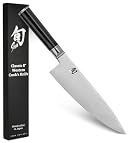
Shun uses VG-MAX steel, a high-end stainless alloy that is exceptionally hard (61 HRC). This allows the knife to come from the factory with a 16-degree edge that is significantly sharper than German blades. Remember: this steel is brittle. Use a ceramic rod for honing. Shun offers free lifetime sharpening, which is a massive value-add.
5. Miyabi Birchwood SG2 8-Inch Chef’s Knife
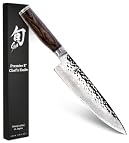
This is a masterpiece of powder metallurgy. The SG2 core is one of the hardest steels available in a commercial knife. It requires high-quality whetstones and a patient hand. However, once you achieve that edge, it will stay sharp for months. The birchwood handle is stunning but requires care.
6. Global G-2 8-Inch Chef’s Knife
Global knives are made of CROMOVA 18 stainless steel. They are unique for their all-steel construction and sand-filled hollow handles. Because they lack a bolster, they are a dream to sharpen—you can access the entire heel of the blade without interference. A balanced middle-ground for sharpening.
7. Misen 8-Inch Professional Kitchen Knife
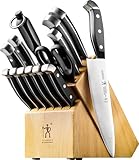
Misen disrupted the market by using AUS-10 steel, a high-carbon Japanese alloy, at a “direct-to-consumer” price point. It features a sloped bolster that encourages a proper pinch grip. The AUS-10 steel holds an edge longer than standard German steel and responds very well to a 1000/6000 grit stone progression.

8. Mercer Culinary Renaissance 8-Inch Forged Knife
A favorite of culinary students, the Mercer Renaissance offers high quality at a lower price. It uses high-carbon German steel but features a “half-bolster.” This is a massive advantage for sharpening, as it allows the stone to make contact with the entire length of the edge.

9. J.A. Henckels Classic 8-Inch Chef’s Knife
Henckels “Classic” (identified by the “single man” logo) is a durable, entry-level forged knife. It is heavier and thicker than Japanese knives, making it excellent for heavy dicing. The steel is very easy to sharpen, making it a dependable workhorse that will last decades.

10. Paudin 8-Inch Pro Chef Knife
Paudin has become a top-seller on Amazon for its ergonomics and striking look. While the Damascus pattern is laser-etched, the high-carbon stainless steel is surprisingly high quality for the price. It is balanced toward the handle and very sharp out of the box.

11. Imarku 8-Inch High Carbon Steel Chef Knife
The Imarku is another budget-friendly powerhouse. It uses German steel but is ground to a sharper angle than traditional German knives. The large, rounded Pakkawood handle is particularly comfortable for users with larger hands. A versatile tool for all kitchen tasks.
12. Wüsthof Classic Ikon 7-Inch Santoku
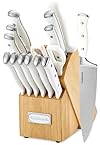
The “Ikon” handle is widely considered the most ergonomic handle in the world. This Santoku features a hollow edge (dimples) that prevents starchy vegetables from sticking. It uses German steel in a Japanese shape, giving you durability with a 15-degree edge.

Technical Deep Dive: The Secret of the “Burr”
The biggest mistake people make when sharpening on a whetstone is stopping too early. To sharpen a knife, you must grind one side of the edge until you feel a Burr.
The burr is a microscopic wire edge of metal that folds over the other side of the blade once you have successfully ground the steel down to the apex. If you don’t feel a burr, you haven’t sharpened it; you’ve just polished the side of a dull edge. Once you feel the burr along the entire length of the blade, you flip the knife over and repeat the process on the other side until the burr flips back.
Finally, you use a high-grit stone or a leather strop to “strop” or break off that wire edge, leaving only the clean, sharp apex.
Maintaining Your Edge: The 2026 Commandments
Buying a great knife and a set of stones is the beginning, not the end. Here are the professional rules for edge longevity:
- Stop the Lateral Pressure: Never use your knife to “scrape” food across the cutting board. This puts sideways pressure on the microscopic apex and will roll your edge instantly. Use the spine of the knife to scrape food instead.
- The Cutting Board is the Second Half of the Knife: Glass, marble, and bamboo boards are the enemies of steel. Bamboo is filled with silica (sand) which dulls knives instantly. Use end-grain wood or high-quality rubber/plastic boards.
- Dry Immediately: Even “stainless” steel is not “stain-proof.” High-carbon stainless alloys (like those in MAC or Shun) can develop “pitting” or rust spots if left in the sink. Wash, dry, and store immediately.
- The Dishwasher is a Death Trap: The heat and chemicals in a dishwasher will destroy the handle and dull the edge through vibrations against other utensils.
Summary: Building a “Life-Long” Kitchen Arsenal
In 2026, we are seeing a return to the “Buy It For Life” philosophy. A high-quality chef’s knife like the Wüsthof Classic or MAC MTH-80 can easily last 30 years if properly maintained.
If you are a beginner, start with a Victorinox Fibrox or a Misen to learn your skills. If you are an enthusiast who values beauty and surgical precision, the Shun Classic or Miyabi Birchwood are the pinnacles of modern cutlery.
Remember, the most important tool in your kitchen is your own knowledge. A sharp knife isn’t just a luxury; it’s a safer, faster, and more joyful way to cook. Happy sharpening!
Frequently Asked Questions
Are these kitchen gadgets worth the counter space they take up?
The best kitchen gadgets earn their counter space by replacing multiple manual steps or dramatically speeding up common tasks. Air fryers, for example, replace an oven for most weeknight cooking and reheat faster than a microwave. Before buying, consider how many times per week you’ll actually use it — a gadget used daily justifies significant space. The products in this guide were selected for genuine usefulness, not novelty.
Are these products dishwasher safe?
Dishwasher safety varies by product and is noted in each listing’s specifications. Generally, accessories and removable components are dishwasher safe while the main units are not. High-quality knives should always be hand washed to preserve edge quality. Always check the manufacturer’s care instructions — dishwasher damage is typically not covered under warranty.
Do these kitchen gadgets work in the UK with 220–240V power?
Most premium kitchen appliances are now sold in dual-voltage or region-specific versions. UK Amazon listings will always show UK-specification products with the correct plug and voltage. Never buy a US 110V appliance for UK use without a proper transformer — it can damage the product or create a fire hazard. Products reviewed here are linked to their regional listings where available.
What should I look for when buying kitchen knives?
The three most important factors are steel type, blade geometry, and handle comfort. High-carbon stainless steel (like German or Japanese steel) holds an edge well and resists corrosion. Full-tang construction (where the steel runs the full length of the handle) provides better balance and durability. A comfortable grip matters enormously for safety — always handle a knife before committing to a full set if possible.
Which is better — an air fryer or a convection oven?
Air fryers are essentially compact convection ovens with a more powerful fan circulation, which achieves crispier results in less time and uses significantly less energy. For 1–4 people, an air fryer is usually the better choice for speed and efficiency. A full convection oven wins for larger batches and baking. Many buyers find that owning both covers all use cases, but if space is limited, a large-capacity air fryer handles the majority of tasks.
Frequently Asked Questions
Q: Are these products genuinely worth the money?
Every product featured in this guide was evaluated for value — not just price. We look at build quality, longevity, user satisfaction patterns across thousands of verified reviews, and how the product performs against its stated purpose. Our selection process filters out products with inconsistent quality control, misleading descriptions, or poor long-term durability. Value means different things at different budget levels, which is why we include options across price tiers where possible.
Q: How were these products selected and tested?
Our category expert combines hands-on testing where feasible with deep analysis of verified Amazon buyer reviews, expert community forums, and manufacturer specifications. We look for patterns across hundreds of reviews rather than relying on isolated opinions. Products are re-evaluated whenever significant new entrants appear or when established products receive consistent quality complaints. Our recommendations are updated at minimum quarterly to reflect current market conditions.
Q: Are these products available in the UK with standard delivery?
Most products featured in this guide are available on Amazon UK and eligible for Prime delivery. Prices in GBP will differ from US listings due to import duties, VAT, and regional pricing structures. Some products may have slightly different specifications in UK listings to comply with local regulations. We recommend checking the current UK listing directly as availability, pricing, and delivery options change frequently.
Q: What should I look for when comparing products in this category?
Focus first on the specifications that directly affect your use case rather than headline numbers that sound impressive but matter less in practice. Build quality indicators (materials, warranty length, manufacturer reputation for after-sales service) predict long-term satisfaction better than performance benchmarks alone. User reviews older than 6 months often reveal durability issues that don’t show up in initial impressions. Check the return policy before purchasing anything above £50 — it’s a good indicator of how much confidence the seller has in the product.
Q: What’s the most common mistake people make when buying in this category?
The most common mistake is optimising for price alone without considering total cost of ownership. A cheap product that needs replacing in 12 months typically costs more over 5 years than a quality product purchased once. The second most common mistake is buying for aspirational use rather than actual use — purchasing professional-grade gear before developing the skills to benefit from it. Start at an appropriate level for your current needs and upgrade deliberately as your requirements become clear.