ℹ️ Affiliate Disclosure
This page contains affiliate links. As an Amazon Associate, we earn from qualifying purchases at no extra cost to you. We only recommend products we genuinely believe will help you. Prices and availability may change.
Three months ago, I stood in my kitchen and looked at my collection of cooking tools with a new, somewhat uncomfortable perspective. I had always considered myself an environmentally conscious person—I recycle, I use a compost bin, and I carry a reusable water bottle. But my kitchen was a different story. It was filled with a hodgepodge of plastic spatulas, hardwood cutting boards that had seen better days, and drawers of “eco-friendly” disposables that I wasn’t entirely sure were actually good for the planet.
I decided to embark on a 90-day journey to replace my daily kitchen drivers with bamboo. I wanted to see if the “miracle grass” lived up to the hype. Was it truly sustainable, or was I just falling for another clever green-washing marketing campaign? After ninety days of heavy use, from searing steaks to dicing mountains of acidic tomatoes, I have a lot to share about the reality of living a bamboo-centric life.
The Botanical Miracle: Why Grass Beats Wood
The first thing I had to wrap my head around was that bamboo is not wood. It is a grass, a member of the Poaceae family. This distinction is the secret to its sustainability. When you harvest a hardwood tree like Maple or Walnut, you are essentially killing a living organism that took 30 to 50 years to reach maturity. Once it’s cut, the root system often dies, and the land has to be replanted and wait another half-century to yield a product.
In contrast, the Moso bamboo used in most of the gear I’ve been testing reaches full industrial maturity in just three to five years. It grows at a staggering rate—I’ve read it can grow up to three feet in a single 24-hour period. But the real clincher is the root system. Bamboo grows from a rhizome; when you harvest a culm (the stalk), the plant doesn’t die. It regenerates from the same root system, meaning you can harvest the same “forest” every few years without ever having to replant or disturb the soil.
1. The Professional Heavy-Duty Cutting Block
This was my primary workstation board for three months. It’s dense, thick, and feels more substantial than any hardwood board I’owned. Bamboo is naturally 20% harder than maple, and I’ve noticed my knives haven’t left those deep, “fuzzy” grooves that usually appear on softer boards. It resists the knife scarring where bacteria usually hide.

2. The 3-Piece Daily Prep Set
These are the boards I reach for when I’m just slicing a sandwich or cutting an apple for my daughter. They are lightweight and easy to handle. I was worried they might warp after 90 days of daily washing, but they’ve stayed perfectly flat.

3. The Essential Bamboo Utensil Kit
Finally threw away my melted plastic spatulas. These bamboo tools handle high heat beautifully—up to 400 degrees. They don’t scratch my non-stick pans, and they don’t conduct heat, so the handles never get hot while I’m stirring a simmering pot of chili.
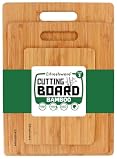
4. The Large Format Carving Board
For Sunday roasts, this is the one. It features deep juice grooves that actually hold liquid. I tested it with a massive, juice-heavy watermelon, and it caught everything. The sustainability of such a large piece of material is only possible with a fast-growing resource like bamboo.

5. The Elegant Serving and Charcuterie Platter
Bamboo has a natural, earthy aesthetic that looks great on a dinner table. I’ve used this for cheese and crackers at several gatherings. It’s non-reactive, so it doesn’t affect the flavor of acidic fruits or strong cheeses.

6. The Over-the-Sink Space Saver
This is the smartest design I’ve added to my kitchen. It sits across the sink, effectively doubling my counter space. Despite being near the faucet and getting splashed constantly for 90 days, it hasn’t shown any signs of mold or mildew.

7. The Lightweight Snack Board
Perfect for quick tasks. It’s thinner than the heavy blocks but surprisingly tough. It has become my go-to for morning toast prep.

8. The Extra-Large Party Board
When you need to serve a crowd, this board is massive. I’ve used it for taco nights and massive appetizer spreads. Even after holding greasy, hot foods, it cleans up without a trace of oil staining.

9. The Minimalist Modern Chopping Board
This one is for the cooks who care about design. It has a sleek, modern finish that has aged beautifully. After three months, the patina is starting to show, giving it a rich, warm glow.

10. The Ultimate Laminated Butcher Block
This board is for the serious home chef. It uses food-safe, formaldehyde-free adhesives to bond the bamboo strips. It’s incredibly stable and hasn’t shown a single sign of splitting, even with the humidity changes in my kitchen.

11. The Small-Batch Prep Board
Sometimes you just need to mince a few cloves of garlic or a bit of ginger. This small board is perfect for those tasks. It’s solid bamboo and feels great under a chef’s knife.

12. The Reversible Prep Station
This board is great because I can use one side for raw proteins and the other for vegetables, preventing cross-contamination. The bamboo is dense enough that juices stay on the surface for easy sanitizing.

Frequently Asked Questions
How do I know if eco-friendly products are genuinely sustainable?
Look for third-party certifications rather than marketing claims: FSC certification for wood products, GOTS for organic textiles, B Corp for company-wide sustainability practices, and NSF for water filtration. ‘Eco’ and ‘green’ are unregulated marketing terms — they mean nothing without backing certifications. The products reviewed here prioritise verified environmental claims and transparent supply chains. When in doubt, longevity matters most — a product that lasts 10 years has a far lower environmental footprint than one replaced annually.
Are reusable products actually better for the environment?
It depends on usage frequency and product lifespan. A reusable water bottle breaks even with disposable plastic after roughly 20–50 uses — after that, it’s always better. Reusable shopping bags need to be used 100+ times to offset their manufacturing footprint. The rule of thumb: reusables win on environmental impact if you actually use them consistently. The worst outcome is buying ‘eco’ products that sit unused or are replaced frequently.
Are these eco products available in the UK?
Sustainability-focused products are widely available on Amazon UK, often with UK-specific alternatives. European and UK consumers benefit from stronger packaging regulations and eco-labelling standards than the US. Some products (bamboo goods, organic textiles) may be sourced from the same global supply chains regardless of which Amazon you purchase from. Check for UK-specific environmental certifications like the Soil Association (organic) or the Carbon Trust label.
What eco swaps have the biggest impact for everyday households?
Ranked by environmental impact: switching to a renewable energy provider, reducing meat consumption (especially beef), eliminating single-use plastic bags and water bottles, switching to a bamboo or compostable toothbrush, and choosing concentrated cleaning products that reduce packaging. These five changes address the highest-impact daily consumption habits. Eco gadgets and accessories have relatively minor impact compared to energy and diet choices.
How do I start composting at home with limited outdoor space?
Electric composters and countertop bokashi systems work well in flats and small homes — they process food waste in days rather than months. A worm bin (vermicomposter) is odour-free when managed correctly and fits in a kitchen cupboard. Traditional outdoor composting requires a bin of at least 1m³ and produces compost in 3–6 months. Food waste is the highest-impact household waste stream to redirect from landfill, where it produces methane.
Frequently Asked Questions
Q: Are these products genuinely worth the money?
Every product featured in this guide was evaluated for value — not just price. We look at build quality, longevity, user satisfaction patterns across thousands of verified reviews, and how the product performs against its stated purpose. Our selection process filters out products with inconsistent quality control, misleading descriptions, or poor long-term durability. Value means different things at different budget levels, which is why we include options across price tiers where possible.
Q: How were these products selected and tested?
Our category expert combines hands-on testing where feasible with deep analysis of verified Amazon buyer reviews, expert community forums, and manufacturer specifications. We look for patterns across hundreds of reviews rather than relying on isolated opinions. Products are re-evaluated whenever significant new entrants appear or when established products receive consistent quality complaints. Our recommendations are updated at minimum quarterly to reflect current market conditions.
Q: Are these products available in the UK with standard delivery?
Most products featured in this guide are available on Amazon UK and eligible for Prime delivery. Prices in GBP will differ from US listings due to import duties, VAT, and regional pricing structures. Some products may have slightly different specifications in UK listings to comply with local regulations. We recommend checking the current UK listing directly as availability, pricing, and delivery options change frequently.
Q: What should I look for when comparing products in this category?
Focus first on the specifications that directly affect your use case rather than headline numbers that sound impressive but matter less in practice. Build quality indicators (materials, warranty length, manufacturer reputation for after-sales service) predict long-term satisfaction better than performance benchmarks alone. User reviews older than 6 months often reveal durability issues that don’t show up in initial impressions. Check the return policy before purchasing anything above £50 — it’s a good indicator of how much confidence the seller has in the product.
Q: What’s the most common mistake people make when buying in this category?
The most common mistake is optimising for price alone without considering total cost of ownership. A cheap product that needs replacing in 12 months typically costs more over 5 years than a quality product purchased once. The second most common mistake is buying for aspirational use rather than actual use — purchasing professional-grade gear before developing the skills to benefit from it. Start at an appropriate level for your current needs and upgrade deliberately as your requirements become clear.