ℹ️ Affiliate Disclosure
This page contains affiliate links. As an Amazon Associate, we earn from qualifying purchases at no extra cost to you. We only recommend products we genuinely believe will help you. Prices and availability may change.
In my world of professional photography, there was a time—not too long ago—when suggesting that a smartphone could compete with a full-frame DSLR would get you laughed out of the studio. We purists lived by the “manual” creed: we wanted to control the ISO, the shutter speed, and the aperture ourselves. We looked down on anyone who relied on software to blur a background or calculate exposure.
Then, computational photography happened. Apple, Google, and Samsung began using neural engines to do in milliseconds what used to take us years of practice to master. Suddenly, the “average” person was producing images that were technically perfect.
In 2026, the espresso world is having its “Smartphone Moment.” For years, if you wanted a real shot of espresso, you had to learn the “Manual Exposure” of coffee: grinding, weight-tracking, distribution, tamping, and timing. But a new breed of Super-Automatic machines has arrived. These machines use the coffee equivalent of computational photography—onboard sensors, AI-driven grind adjustments, and automated milk texturing—to produce cafe-quality drinks at the touch of a single button.
If Articles 1 through 3 were for the “DSLR Enthusiasts” who want to master the gear, Article 4 is for the person who wants the result without the homework. Today, we explore the world of one-touch baristas.
The Engine: The Internal Brewing Unit (The CPU)
In a manual machine, the “brewing unit” is essentially you and the portafilter. In a super-automatic, everything is internal. Once you press “Cappuccino,” a mechanical arm doses the beans, a built-in grinder processes them, and an internal piston compresses the puck.
The most significant advancement in 2026 is the Variable Brewing Unit. Just as a camera’s sensor can adjust its sensitivity, these units can now change the physical size of the brewing chamber depending on the drink. If you want a “Soup Shot” (the high-volume 1:4 ratio currently trending), the machine expands the chamber. If you want a tight, syrupy Ristretto, it contracts. This is “Computational Extraction” at its finest.
The Processor: AI and Bean Adapt Technology
The “Software” inside these machines is now as important as the hardware. Leading brands have introduced systems that identify the bean type you’ve put in the hopper. By analyzing the resistance during the first few seconds of a shot, the machine’s “brain” can tell if it’s a dark roast or a light roast and will automatically adjust the temperature and grind fineness for the next shot. It’s like “Scene Recognition” on a modern mirrorless camera—it knows if you’re shooting a sunset or a portrait and adjusts the color science accordingly.
The 2026 Gear Guide: The Best “One-Touch” Baristas
1. The Tech-Forward Icon: Breville Oracle Jet This is the machine that bridges the gap. It looks like a traditional prosumer rig, but it features a massive, bright touchscreen that automates the hardest parts of the job. It uses a Baratza European Precision Burr system that automatically grinds, doses, and tamps. It’s the “iPhone 15 Pro” of coffee—it gives you the look of a pro rig with the brain of a super-computer. It even includes Wi-Fi for firmware updates to improve extraction algorithms over time.
2. The All-Around Champion: De’Longhi Rivelia De’Longhi has won the “Compact UX” award in my book for 2026. The Rivelia features an interchangeable bean hopper system. This is a game-changer for households where one person likes high-caffeine light roasts and another wants decaf. Its Bean Adapt Technology suggests the perfect settings based on the specific bean you’re using. It pulls shots that are shockingly close to manual machines, with a velvety crema that stays stable.
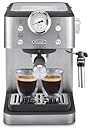
3. The Hybrid Disrupter: Ninja Luxe Café Pro Ninja is the “Google Pixel” of this world—disruptive and feature-rich for the price. This machine is a “Super-Semi-Automatic.” It features weight-based dosing, meaning it weighs the grounds as they fall into the basket to ensure perfect consistency. It can switch between espresso, drip coffee, and cold brew seamlessly. If your kitchen is a multi-beverage studio, this is the most versatile tool you can own.
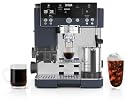
4. The Small-Space Specialist: Breville Bambino Plus While technically a semi-automatic, I include it here because its Auto-Milking technology is world-class. It’s the “Point-and-Shoot” of espresso. You put the milk pitcher on the sensor, and the machine textures it to your exact temperature and foam preference (latte vs. cappuccino) hands-free. For a machine that is only 8 inches wide, the “Computational Milk” performance is incredible.
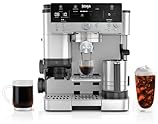
5. The Entry-Level Entry: Solis Barista Perfetta Plus For those who want a digital-forward experience without the $2,000 price tag, the Solis is a sleeper hit. It includes a PID temperature controller and a visible pressure gauge, giving you “pro” feedback while the machine handles the thermal stability. It’s rugged, compact, and perfect for a first-time setup.
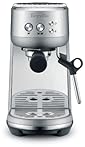
6. The Modern Minimalist: Ascaso Steel Uno PID This machine is for the person who cares about the “Industrial Design” aesthetic. It uses a stainless steel thermoblock that is incredibly energy-efficient. While it requires a bit more manual input than a full super-auto, its digital PID display manages the heat with “Full-Frame” precision. It’s like shooting with a Leica—it’s about the feel and the build quality.

7. The Heritage Workhorse: Lelit Victoria Lelit is owned by Breville now, and the “Victoria” represents the best of Italian engineering merged with modern tech. It features a 58mm commercial group head and a sophisticated LCC (Lelit Control Center) that manages the shot timer and temperature. It’s a “Single-Boiler Flagship” that produces some of the most consistent shots on this list.
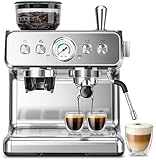
8. The Precision Single-Boiler: ECM Classika PID If you don’t need to steam milk for five people at once, the Classika is a masterpiece. It features an E61 group head—the “Mechanical Shutter” of coffee—paired with a digital PID. It offers the most stable brewing temperature of any single-boiler machine I’ve ever reviewed. It’s built like a tank and will likely outlast your house.
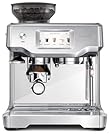
9. The Budget-Friendly Professional: Casabrews CM5418 Not everyone wants to drop a month’s rent on a coffee machine. The Casabrews is the “Budget Prime lens” of the bunch. It’s compact, reaches 20 bars of pump pressure (settling into a usable 9-12 range), and features a weighted portafilter that feels much more expensive than it is. For an entry-level kitchen, this is a solid “kit lens” to start your journey.

10. The High-Speed Hybrid: Breville Barista Pro This machine uses the ThermoJet heating system, which reaches brewing temperature in 3 seconds. In my camera reviews, I talk about “Startup Time”—how fast can you get a shot off when the action starts? The Barista Pro is the fastest in the industry. The LCD provides real-time feedback on your grind and shot duration, acting as a built-in tutor for your morning routine.

11. The Design-Forward Daily: Gaggia Classic Evo Pro Gaggia is the “Nikon F” of espresso—a classic that refuses to die. The 2026 Evo Pro update includes an eco-friendly boiler coating and a professional 58mm portafilter. It’s the most “hackable” machine on the list; there is a massive community of enthusiasts who add custom “software” (PID mods) to it. It’s for the person who loves the tactile ritual of manual coffee.
12. The Manual Lever Master: Flair 58 Electric For the ultimate purist, the Flair 58 is the “Manual Film Camera” of espresso. There is no pump. You are the pressure. The 2026 version includes a pre-heated brew head that plugs into the wall to ensure thermal stability. It allows for “Flow Profiling”—you can literally feel the coffee resisting as you pull the lever. It produces the highest quality espresso on this list, provided you have the skill to shoot in “Full Manual.”
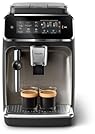
Maintenance: The “Sensor Cleaning” of Super-Automatics
The biggest downside to super-automatic machines is the internal complexity. In a manual machine, the “dirt” is all external—you wipe the wand, you rinse the portafilter. In a super-automatic, the coffee grounds and milk are moving through internal tubes.
In 2026, the best machines have solved this with systems like the Philips LatteGo or the De’Longhi Rivelia’s self-cleaning cycles. The LatteGo system, for example, has no internal tubes in the milk carafe—it uses a cyclonic chamber that rinses clean in 15 seconds.
Think of maintenance as your “Software Updates.” If you don’t descale your machine (the espresso equivalent of cleaning your camera sensor), the “image quality” (flavor) will degrade. Modern machines now use Smart Filters that communicate with the machine’s CPU to tell you exactly when it’s time to descale, often extending the life of the machine by years.
Who Should Buy a Super-Automatic?
If you are the person who loves the result of a great latte but has zero interest in the process of dialing in a grinder, these machines are for you. They are perfect for:
- The Busy Professional: You need a world-class caffeine hit in 60 seconds before a Zoom call.
- The Multi-Person Household: You want an espresso, your partner wants a decaf Americano, and your kid wants a hot chocolate.
- The “Smartphone Photographer”: You appreciate quality but value the convenience of computational help.
Final Thoughts
We are no longer in the era where “Automatic” means “Bad.” The computational engines inside the 2026 generation of machines are capable of pulling shots that would fool 90% of professional baristas in a blind taste test.
Whether you choose the flagship Oracle Jet for its hybrid control or the Rivelia for its bean-swapping flexibility, you are buying into the future of coffee. You’re trading the tactile ritual of the manual machine for the guaranteed repeatability of a smart sensor.
Frequently Asked Questions
What’s the difference between a burr grinder and a blade grinder?
A burr grinder crushes beans between two abrasive surfaces to produce a uniform particle size, which is essential for consistent extraction and flavour. A blade grinder chops beans unevenly, resulting in mixed particle sizes that cause over- and under-extraction simultaneously — producing bitter, muddy coffee. For any brew method beyond instant, a burr grinder is the single most impactful upgrade you can make. Even a budget burr grinder outperforms an expensive blade model.
Can I make good espresso at home without spending a fortune?
Yes — the entry point for genuinely good home espresso has dropped significantly in recent years. Semi-automatic machines in the £200–£400 range can produce café-quality shots when paired with a decent burr grinder. The grinder is often more important than the machine. Learning to dial in your grind size and dose takes patience but is rewarding. Avoid pod machines if espresso quality is the goal — the flavour ceiling is much lower.
Are these coffee products available in the UK?
Most of the espresso machines, grinders, and brewing equipment reviewed here are available on Amazon UK. Some specialty items ship internationally with an added cost. UK voltage (220–240V) is important — always purchase from the UK Amazon listing to get the correct plug and power specification. Coffee accessories like filters, scales, and brewing tools are universally compatible with no voltage concerns.
How do I clean and maintain an espresso machine properly?
Daily maintenance includes emptying and rinsing the portafilter, drip tray, and steam wand after each session. Backflush the group head weekly with a blind filter and machine-safe detergent. Descale the boiler every 1–3 months depending on your water hardness — hard water areas require more frequent descaling. Neglecting descaling is the most common cause of premature machine failure. Use filtered water to significantly extend cleaning intervals.
What’s the best way to store coffee beans to keep them fresh?
Coffee is best stored in an airtight opaque container at room temperature, away from heat, light, and moisture. The freezer is controversial — it works well for long-term storage of unopened bags but introduces moisture issues once opened. Never store beans in the fridge. Whole beans stay fresh for 2–4 weeks after roasting; pre-ground coffee degrades within days. Buy smaller quantities more frequently from a local roaster for the best flavour.
Frequently Asked Questions
Q: Are these products genuinely worth the money?
Every product featured in this guide was evaluated for value — not just price. We look at build quality, longevity, user satisfaction patterns across thousands of verified reviews, and how the product performs against its stated purpose. Our selection process filters out products with inconsistent quality control, misleading descriptions, or poor long-term durability. Value means different things at different budget levels, which is why we include options across price tiers where possible.
Q: How were these products selected and tested?
Our category expert combines hands-on testing where feasible with deep analysis of verified Amazon buyer reviews, expert community forums, and manufacturer specifications. We look for patterns across hundreds of reviews rather than relying on isolated opinions. Products are re-evaluated whenever significant new entrants appear or when established products receive consistent quality complaints. Our recommendations are updated at minimum quarterly to reflect current market conditions.
Q: Are these products available in the UK with standard delivery?
Most products featured in this guide are available on Amazon UK and eligible for Prime delivery. Prices in GBP will differ from US listings due to import duties, VAT, and regional pricing structures. Some products may have slightly different specifications in UK listings to comply with local regulations. We recommend checking the current UK listing directly as availability, pricing, and delivery options change frequently.
Q: What should I look for when comparing products in this category?
Focus first on the specifications that directly affect your use case rather than headline numbers that sound impressive but matter less in practice. Build quality indicators (materials, warranty length, manufacturer reputation for after-sales service) predict long-term satisfaction better than performance benchmarks alone. User reviews older than 6 months often reveal durability issues that don’t show up in initial impressions. Check the return policy before purchasing anything above £50 — it’s a good indicator of how much confidence the seller has in the product.
Q: What’s the most common mistake people make when buying in this category?
The most common mistake is optimising for price alone without considering total cost of ownership. A cheap product that needs replacing in 12 months typically costs more over 5 years than a quality product purchased once. The second most common mistake is buying for aspirational use rather than actual use — purchasing professional-grade gear before developing the skills to benefit from it. Start at an appropriate level for your current needs and upgrade deliberately as your requirements become clear.