ℹ️ Affiliate Disclosure
This page contains affiliate links. As an Amazon Associate, we earn from qualifying purchases at no extra cost to you. We only recommend products we genuinely believe will help you. Prices and availability may change.
For decades, the coffee world was divided by a Great Wall of Flavor. On one side stood the manual purists, armed with gooseneck kettles and stopwatches, insisting that true soul could only be extracted through the steady, rhythmic hand-pour of a human barista. On the other side were the convenience seekers, tethered to “automatic drip” machines that, while efficient, often produced “diner coffee”—hot, bitter, and devoid of the delicate floral or fruity notes that make specialty beans worth their price tag.
But as we move through 2026, that wall has not just been breached; it has been dismantled. We have entered the era of the Precision Brewer.
The transition from manual to high-tech automation isn’t about laziness; it’s about the pursuit of the “Perfect Repeatable Cup.” Even the most skilled barista has “off” mornings where their spiral pour is slightly inconsistent or their water temperature fluctuates by a few degrees. High-end automatic pour-over sets are designed to eliminate human error while utilizing the same thermodynamic and geometric principles we’ve discussed in earlier guides.
In this deep dive, we are going to look at the machines that are redefining the countertop. We will explore how robotic “spiral pours,” PID-controlled heating elements, and programmable bloom phases are bringing the cafe slow-bar experience into the home kitchen with the push of a single button.
The Tech Behind the Transformation
What separates a standard $40 drip machine from a $500 precision brewer? It comes down to three specific engineering feats:
1. PID Temperature Stability
In a cheap machine, the water is heated by a simple element that often “burps” steam and boiling water onto the grounds, scorched them at 212°F, or under-extracting them at 180°F. Precision brewers use Proportional-Integral-Derivative (PID) controllers. These are the same sensors used in laboratory equipment to maintain a rock-steady temperature (usually 200°F to 205°F) from the first drop to the last.
2. The “Rainmaker” Showerhead
Manual pour-over relies on a thin stream of water to create turbulence and ensure every ground is saturated. Modern automatics mimic this with sophisticated showerheads. Instead of a single “dump” hole, they use laser-etched patterns that “rain” water in specific pulses, ensuring a flat coffee bed and preventing “channeling”—the nemesis of good flavor.
3. Programmable Bloom and Pulse Phases
The most advanced machines now allow you to program a “Bloom Phase.” They wet the grounds with a small amount of water, wait 45 seconds for the CO2 to escape (degassing), and then begin a series of “Pulse Pours.” This mimics exactly what a barista does with a kettle, allowing for a higher concentration of solubles and a cleaner finish.
The Top 12 High-Tech and Precision Pour-Over Sets
1. The Digital Purist’s Dream: Fellow Aiden Precision Coffee Maker
If you want the absolute peak of “Computational Brewing,” the Fellow Aiden is it. This machine doesn’t just drip water; it features a dual-showerhead system that can handle single-serve or batch brewing with zero compromise. It comes with “Brew Profiles” out of the box, developed by World Barista Champions. It adjusts the water temperature during the brew cycle to match the specific roast level of your beans. It’s like having a professional barista living inside your kitchen cabinet.

2. The Internet-Connected Professional: xBloom Studio
The xBloom Studio is essentially the “Apple of Coffee.” It uses a specialized hopper system and a built-in grinder that communicates with a smartphone app to download specific recipes for individual coffee bags. It uses a “Solid-State” heating system that provides instant, precise thermal control. If you love discovering new high-end roasters from around the world, this machine will ensure you brew them exactly as the roaster intended.
3. The Heritage Standard: Technivorm Moccamaster KBGV Select
Hand-built in the Netherlands, the Moccamaster is the “Mechanical Legend.” It doesn’t have a screen or an app, but its copper heating element is so precise that it has held the SCAA certification for decades. The “Select” switch allows you to optimize the water flow for either a half-carafe or a full-carafe, ensuring that the contact time remains perfect regardless of the volume. It’s built to last 20+ years and is the most reliable machine on this list.
4. The Visual Masterpiece: Chemex Ottomatic 2.0
The Ottomatic 2.0 manages the delivery of water to the classic Chemex carafe. It includes a specialized “Greens” mode for lighter roasts and a “Bloom” cycle that pauses the water flow to allow the coffee to degas. It’s the most beautiful machine for a modern minimalist kitchen, combining the iconic glass design of the Chemex with a high-tech thermal engine.
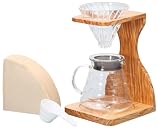
5. The Compact Minimalist: OXO Brew Pour-Over
For those who want to start their precision journey without a massive investment, the OXO Brew is a sleeper hit. It features a water tank with a specialized hole pattern that distributes water in a circular motion over the grounds. It mimics the “hand-pour” technique perfectly without the need for a gooseneck kettle. It’s simple, effective, and very easy to clean.

6. The Hybrid Tool: Clever Coffee Dripper
While technically a manual brewer, the Clever Dripper is a “Smart” immersion tool. It combines the clean cup of a pour-over with the body of a French Press. Its “shutter” system allows the coffee to steep for a precise amount of time before you release it into your mug. It is the most forgiving brewer on the market; it is almost impossible to make a bad cup of coffee with a Clever.

7. The Multi-Purpose Powerhouse: Gevi 4-in-1 Smart Pour-Over
The Gevi is a beast. It features a built-in scale and a rotating showerhead that can mimic the circular motion of a hand-pour. It’s the “Swiss Army Knife” of automated brewing. If you want to nerd out on every variable—from rotational speed to temperature—this machine gives you the control that others hide behind automated “presets.”

8. The Go-To Setup: Fellow Stagg XF Pour-Over Set
If you prefer to keep it manual but want the best possible temperature stability, the Stagg XF features a double-walled vacuum-insulated dripper. This keeps the heat inside the coffee grounds where it belongs, rather than letting it escape into the air. The set includes a hand-blown borosilicate carafe that looks stunning on any breakfast table.
9. The “Zero-Bypass” Revolution: NextLevel Pulsar Brewer
The Pulsar is the 2026 favorite of the “Coffee Geeks.” It features a “Zero-Bypass” design, meaning all the water must go through the coffee bed—none can escape around the sides. This leads to a much higher extraction and a clarity of flavor that was previously only available in commercial labs. It’s a manual brewer, but its performance is “Precision Grade.”

10. The Switch Hitter: Hario Switch Glass Set
Hario took their legendary V60 and added a “Switch” at the bottom. This allows you to toggle between immersion brewing (like a French Press) and percolation (like a standard pour-over). It’s the perfect tool for the “hybrid” enthusiast who likes to experiment with different textures and bodies in their morning cup.

11. The Large-Batch Specialist: Breville Precision Brewer
If you regularly host guests, the Breville Precision is the “Large Format” king. It has a massive 60oz capacity and features a specialized “Gold Cup” mode that meets the highest SCAA standards for batch brewing. It includes a flat-bottom basket and a cone filter attachment, allowing you to change the flavor profile based on the filter shape—a luxury that few other batch brewers offer.

12. The Designer Glass: Timemore Crystal Eye
Timemore has created a porcelain dripper that uses a specialized “rib” design to ensure the paper filter doesn’t stick to the walls, allowing for optimal air-flow. It’s beautiful, effective, and represents the best of modern Asian specialty coffee design.

Why Workflow is the New “Flavor”
When choosing between a manual set and a high-tech automatic, you aren’t just choosing a taste; you are choosing a workflow.
- The Ritualist: If you find peace in the 5-minute process of hand-pouring, stick with the Hario V60 or Chemex.
- The Busy Professional: If you want “God-tier” coffee but need to be answering emails or getting kids ready for school, the Fellow Aiden or xBloom Studio are life-changers.
- The Host: If you regularly have guests, the Breville Precision Brewer or Moccamaster provide batch-sized pour-over quality.
Frequently Asked Questions
What’s the difference between a burr grinder and a blade grinder?
A burr grinder crushes beans between two abrasive surfaces to produce a uniform particle size, which is essential for consistent extraction and flavour. A blade grinder chops beans unevenly, resulting in mixed particle sizes that cause over- and under-extraction simultaneously — producing bitter, muddy coffee. For any brew method beyond instant, a burr grinder is the single most impactful upgrade you can make. Even a budget burr grinder outperforms an expensive blade model.
Can I make good espresso at home without spending a fortune?
Yes — the entry point for genuinely good home espresso has dropped significantly in recent years. Semi-automatic machines in the £200–£400 range can produce café-quality shots when paired with a decent burr grinder. The grinder is often more important than the machine. Learning to dial in your grind size and dose takes patience but is rewarding. Avoid pod machines if espresso quality is the goal — the flavour ceiling is much lower.
Are these coffee products available in the UK?
Most of the espresso machines, grinders, and brewing equipment reviewed here are available on Amazon UK. Some specialty items ship internationally with an added cost. UK voltage (220–240V) is important — always purchase from the UK Amazon listing to get the correct plug and power specification. Coffee accessories like filters, scales, and brewing tools are universally compatible with no voltage concerns.
How do I clean and maintain an espresso machine properly?
Daily maintenance includes emptying and rinsing the portafilter, drip tray, and steam wand after each session. Backflush the group head weekly with a blind filter and machine-safe detergent. Descale the boiler every 1–3 months depending on your water hardness — hard water areas require more frequent descaling. Neglecting descaling is the most common cause of premature machine failure. Use filtered water to significantly extend cleaning intervals.
What’s the best way to store coffee beans to keep them fresh?
Coffee is best stored in an airtight opaque container at room temperature, away from heat, light, and moisture. The freezer is controversial — it works well for long-term storage of unopened bags but introduces moisture issues once opened. Never store beans in the fridge. Whole beans stay fresh for 2–4 weeks after roasting; pre-ground coffee degrades within days. Buy smaller quantities more frequently from a local roaster for the best flavour.
Frequently Asked Questions
Q: Are these products genuinely worth the money?
Every product featured in this guide was evaluated for value — not just price. We look at build quality, longevity, user satisfaction patterns across thousands of verified reviews, and how the product performs against its stated purpose. Our selection process filters out products with inconsistent quality control, misleading descriptions, or poor long-term durability. Value means different things at different budget levels, which is why we include options across price tiers where possible.
Q: How were these products selected and tested?
Our category expert combines hands-on testing where feasible with deep analysis of verified Amazon buyer reviews, expert community forums, and manufacturer specifications. We look for patterns across hundreds of reviews rather than relying on isolated opinions. Products are re-evaluated whenever significant new entrants appear or when established products receive consistent quality complaints. Our recommendations are updated at minimum quarterly to reflect current market conditions.
Q: Are these products available in the UK with standard delivery?
Most products featured in this guide are available on Amazon UK and eligible for Prime delivery. Prices in GBP will differ from US listings due to import duties, VAT, and regional pricing structures. Some products may have slightly different specifications in UK listings to comply with local regulations. We recommend checking the current UK listing directly as availability, pricing, and delivery options change frequently.
Q: What should I look for when comparing products in this category?
Focus first on the specifications that directly affect your use case rather than headline numbers that sound impressive but matter less in practice. Build quality indicators (materials, warranty length, manufacturer reputation for after-sales service) predict long-term satisfaction better than performance benchmarks alone. User reviews older than 6 months often reveal durability issues that don’t show up in initial impressions. Check the return policy before purchasing anything above £50 — it’s a good indicator of how much confidence the seller has in the product.
Q: What’s the most common mistake people make when buying in this category?
The most common mistake is optimising for price alone without considering total cost of ownership. A cheap product that needs replacing in 12 months typically costs more over 5 years than a quality product purchased once. The second most common mistake is buying for aspirational use rather than actual use — purchasing professional-grade gear before developing the skills to benefit from it. Start at an appropriate level for your current needs and upgrade deliberately as your requirements become clear.