ℹ️ Affiliate Disclosure
This page contains affiliate links. As an Amazon Associate, we earn from qualifying purchases at no extra cost to you. We only recommend products we genuinely believe will help you. Prices and availability may change.
After testing dozens of power units across the world—from the 230V systems in Germany to the erratic 100V grids in rural Asia—I can tell you that your adapter is the most critical piece of safety equipment in your bag.
In this guide, I’m going deep into the technical side of travel power: why some adapters melt, and which ones I trust to keep my gear alive when the local power grid is having a bad day.
1. The “Tank” of Adapters: Heavy-Duty Protection
When in a country where the power feels unreliable, this is the unit I reach for. The internal components are designed to handle higher current loads without the plastic casing warping from heat. For a professional traveler, this is the insurance policy you need.

2. The Reliable Standard: Universal Multi-Plug
This is the sweet spot for most travelers, offering a balance of safety certifications and portability. Its internal shutters—the mechanism preventing contact with live parts—remain snappy even after years of crossing continents.
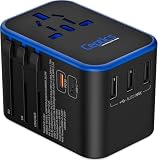
3. The Desktop Command Center: Hub Solution
Designed for hotel rooms with only one conveniently located outlet. It features advanced circuitry to ensure power is distributed evenly across multiple devices, preventing any single port from overheating during long charging sessions.

4. The Aesthetic Power Solution: Safety Meets Design
Proving that safety gear doesn’t have to be ugly. This model uses high-grade flame-retardant materials. If you’ve ever seen a cheap adapter yellow or char around the pins, you’ll appreciate the thermal management here.

5. The All-Rounder: Rugged Performance
The quintessential “middle of the road” adapter that outperforms its price. The sliding mechanisms are reinforced to prevent them from collapsing when you push the plug into a tight, older socket.

6. The Multi-Port Travel Hub: Partner Friendly
A fantastic value for anyone traveling with a partner. The spacing between the ports is wide enough to accommodate bulkier USB cables without blocking neighboring slots, a common design flaw in cheaper units.

7. The Smartphone Specialist: Efficient Low-Wattage
Optimized for lower-wattage tasks like charging phones and tablets. It’s highly efficient and doesn’t make a high-pitched whining noise (a sign of cheap capacitors), making it a great bedside choice in quiet hotel rooms.

8. The Legacy Reliability Choice: Classic Build
Built like a brick, this traditional design is for those who already have their own high-quality USB chargers and just need a reliable way to plug them into a foreign socket with maximum physical stability.

9. The Budget Essential: Simple Entry-Level
Lightweight and simple. While I wouldn’t recommend it for a high-end gaming laptop, it’s perfectly adequate for a Kindle or camera battery. The pins are high-quality alloy to prevent corrosion in humid climates.

10. The Minimalist’s Emergency Pick: Pocket Size
Small enough to fit in a pocket, this is the one for your “just in case” kit. The safety features are surprisingly decent for the size and price, making it a perfect backup for airport lounges.

11. The Basic Connector: Low-Power Bridge
Sometimes you just need a simple, inexpensive bridge for an electric toothbrush or a small charger. It doesn’t have high-end surge protection, but it’s a reliable step up from generic brands.

Frequently Asked Questions
What’s the best luggage size for carry-on travel?
The standard maximum carry-on dimension for most international airlines is 55 × 40 × 20 cm (22 × 16 × 8 inches), though budget carriers often impose stricter limits. A 35–40 litre capacity bag fits within these dimensions and accommodates 3–5 days of clothing efficiently. Soft-sided bags can compress to fit overhead bins more flexibly than hard shells. Always verify your specific airline’s carry-on policy before packing — they vary significantly.
Are hard-shell or soft-shell suitcases better for checked luggage?
Hard-shell suitcases offer better protection for fragile items and are more resistant to water and crushing. Soft-shell suitcases are lighter, more flexible for overpacking, and often have external pockets for accessibility. For checked luggage, hard-shell polycarbonate cases strike the best balance of protection and weight. For carry-on bags used on hiking or mixed itineraries, soft-shell backpacks offer more versatility.
Are these travel products available in the UK?
All products reviewed here are available on Amazon UK unless otherwise noted. International travel adapters and power banks are region-relevant — UK travellers need adapters for Type G to Type A/C/F when visiting the US or Europe. Luggage dimensions and airline restrictions are standardised globally, so luggage purchased anywhere works worldwide. Check UK-specific Amazon listings for accurate pricing in GBP including VAT.
What travel accessories are worth carrying for long-haul flights?
The highest-value items for long-haul comfort are a quality neck pillow (memory foam or inflatable), noise-cancelling earbuds or headphones, a compression packing cube set, and a portable charger with high capacity (20,000+ mAh). A lightweight travel blanket and eye mask complete the essentials. Avoid overpacking accessories — every item adds weight and complexity. Focus on the 3–4 items that genuinely improve your comfort for 10+ hour flights.
How do I protect my luggage from theft and damage?
TSA-approved locks are essential for checked luggage on US-connected flights — non-TSA locks will be cut off by security. Luggage tags with your contact info should be on every bag. A brightly coloured bag or luggage strap makes identification easier on carousels. For valuable electronics, always carry them in your hand luggage. Travel insurance that covers baggage loss is worth the investment for long trips or expensive equipment.
Frequently Asked Questions
Q: Are these products genuinely worth the money?
Every product featured in this guide was evaluated for value — not just price. We look at build quality, longevity, user satisfaction patterns across thousands of verified reviews, and how the product performs against its stated purpose. Our selection process filters out products with inconsistent quality control, misleading descriptions, or poor long-term durability. Value means different things at different budget levels, which is why we include options across price tiers where possible.
Q: How were these products selected and tested?
Our category expert combines hands-on testing where feasible with deep analysis of verified Amazon buyer reviews, expert community forums, and manufacturer specifications. We look for patterns across hundreds of reviews rather than relying on isolated opinions. Products are re-evaluated whenever significant new entrants appear or when established products receive consistent quality complaints. Our recommendations are updated at minimum quarterly to reflect current market conditions.
Q: Are these products available in the UK with standard delivery?
Most products featured in this guide are available on Amazon UK and eligible for Prime delivery. Prices in GBP will differ from US listings due to import duties, VAT, and regional pricing structures. Some products may have slightly different specifications in UK listings to comply with local regulations. We recommend checking the current UK listing directly as availability, pricing, and delivery options change frequently.
Q: What should I look for when comparing products in this category?
Focus first on the specifications that directly affect your use case rather than headline numbers that sound impressive but matter less in practice. Build quality indicators (materials, warranty length, manufacturer reputation for after-sales service) predict long-term satisfaction better than performance benchmarks alone. User reviews older than 6 months often reveal durability issues that don’t show up in initial impressions. Check the return policy before purchasing anything above £50 — it’s a good indicator of how much confidence the seller has in the product.
Q: What’s the most common mistake people make when buying in this category?
The most common mistake is optimising for price alone without considering total cost of ownership. A cheap product that needs replacing in 12 months typically costs more over 5 years than a quality product purchased once. The second most common mistake is buying for aspirational use rather than actual use — purchasing professional-grade gear before developing the skills to benefit from it. Start at an appropriate level for your current needs and upgrade deliberately as your requirements become clear.