ℹ️ Affiliate Disclosure
This page contains affiliate links. As an Amazon Associate, we earn from qualifying purchases at no extra cost to you. We only recommend products we genuinely believe will help you. Prices and availability may change.
If you had asked me five years ago which was better—corded or cordless—the answer would have been a shrug and a “it depends on how much you like extension cords.” But as we move through 2026, that conversation has shifted from a simple preference to a deep technical standoff. After half a decade of heavy-duty renovations, framing, and delicate cabinetry, I’ve realized that the “cordless revolution” hasn’t actually killed the corded drill; it has just forced it to evolve into a specialized powerhouse.
In this deep dive, I’m going to share the hard truths about “Voltage Sag,” the “Price-Per-Watt” reality that manufacturers don’t want you to calculate, and why your toolbox actually needs a mix of both worlds to be truly effective.
The Myth of Cordless Supremacy
Don’t get me wrong—I love my battery tools. Not having to hunt for a clean outlet on a muddy jobsite is a blessing. But after 60 months of daily use, I’ve seen where the batteries fail.
The biggest issue in 2026 is still Voltage Sag. You’ve felt it: you’re halfway through a 3-inch hole with a spade bit, and the drill starts to bog down. As your lithium-ion battery drops below 30%, the internal resistance increases, and the power delivery drops off a cliff. A corded drill, however, is plugged into a “battery” the size of a power plant. It gives you 100% of its torque from the first trigger pull to the thousandth.
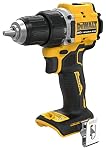
1. DEWALT 20V MAX XR Brushless Compact Drill
This is the gold standard for cordless ergonomics. If you are working in a tight attic or under a sink, the compact head length on the XR is a life-saver. DeWalt has perfected the balance here; it doesn’t feel “bottom-heavy” like some older cordless models. It’s my go-to for about 70% of my daily tasks.
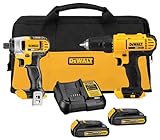
2. DEWALT 20V MAX Cordless Drill / Driver Kit
If you are just starting out and the “XR” price tag is a bit much, this standard 20V kit is the bridge. It’s a bit longer than the brushless version, but for general home repairs—fixing fences or building a garden bed—it provides more than enough punch without the professional overhead.

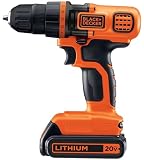
3. BLACK+DECKER 20V MAX Cordless Drill
Let’s talk about the “indoor” drill. I keep one of these in the kitchen junk drawer. Why? Because I don’t want to bring my muddy, sawdust-covered contractor drills inside to hang a towel rack. It’s lightweight, the battery holds a charge for months of non-use, and at this price, it’s the ultimate homeowner insurance.
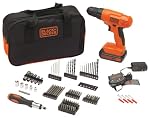
4. Generic 21V High-Torque Cordless Kit
I’m often asked if these ultra-budget kits are worth it. In 2026, the answer is “yes, for students or temporary jobs.” While the build quality won’t last five years of professional abuse, the raw torque for the price is staggering. It’s a capable tool for one-off weekend projects.

5. Compact 21V Cordless Brushless Driver
This is a specialized “finesse” tool. It’s designed for high-speed fastening rather than heavy hole-drilling. If you’re an electrician or someone doing a lot of switch-plate and cabinetry work, the lower weight of this brushless unit prevents operator fatigue.

6. Pink Power 18V Specialized Drill
Don’t let the color fool you; the ergonomics here are specifically tuned for smaller hands. I’ve recommended this to several clients who found heavy industrial drills too bulky. It features a built-in bubble level on the top, which is a fantastic addition for ensuring pilot holes are straight.

7. CRAFTSMAN V20 Cordless Drill/Driver Kit
Craftsman is the king of the middle ground. This V20 model is what I call a “truck drill.” It’s reliable, the batteries are cheap and plentiful, and it has a very satisfying mechanical clutch. It feels much more expensive than its price point suggests.

8. Corded 6.0-Amp Variable Speed Drill
This is the tool that never dies. If I’m in my workshop and within reach of an outlet, I use this. It’s about a pound lighter than its cordless siblings and it never stops. For repetitive drilling or mixing small batches of paint, you cannot beat a corded motor.

9. Makita 18V LXT Lithium-Ion Brushless Drill
If you want a tool that sounds like a precision watch, buy a Makita. Their brushless motors have a unique “soft start” that I haven’t found in other brands. It’s useful when you’re starting a hole in a delicate material like finished hardwood.
10. SKIL 20V PWRCORE Brushless Drill
Skil has carved out a niche with their battery tech. Their batteries have a USB port to charge your phone, but the drill itself is no slouch. It features the PWRCORE cooling system, which manages heat during high-demand jobs.

11. Heavy-Duty Cordless Industrial Drill
For the contractor, this is the “beater.” It’s designed to be dropped, rained on, and pushed to the limit. It lacks the digital telemetry of some high-end smart drills, but in the world of power tools, sometimes “simple and strong” is exactly what you need.
Frequently Asked Questions
What power tools should a beginner woodworker buy first?
The essential starter kit for most woodworking projects is: a cordless drill/driver (the single most versatile tool), a circular saw or jigsaw for cutting, a random orbital sander, and a good set of clamps. These four tools handle 80% of beginner projects. A miter saw is the next most useful addition for accurate crosscuts. Avoid buying a table saw first — they require significant space, technique, and safety awareness that’s better developed with simpler tools.
What’s the difference between a drill and an impact driver?
A drill rotates a bit at variable speed and is ideal for drilling holes and driving screws into soft material. An impact driver uses rotational force plus concussive blows, making it dramatically more effective for driving long screws, lag bolts, and fasteners into dense wood without stripping heads. For woodworking, a drill is more versatile, but an impact driver is the better choice for construction and deck work. Many kits include both — this is the most practical option.
Are these power tools available in the UK with 240V power?
All power tools on Amazon UK are listed with UK-specification voltage (220–240V) and UK plugs. Never purchase US 110V power tools for use in the UK — they run at half speed and will burn out. Battery-powered tools are voltage-compatible worldwide as the battery manages power delivery. Brands like DeWalt, Makita, and Bosch offer identical tool ranges in both US and UK markets with region-appropriate power supplies.
How important is clamp quality in woodworking?
Clamps are underestimated by beginners and essential for precise joinery. You cannot have too many — most experienced woodworkers agree that clamps are their most-purchased tool category over time. Parallel-jaw clamps (like Bessey or Jet) apply even pressure without racking and are the professional standard for cabinetry. F-clamps and bar clamps are more affordable and versatile for general assembly. A set of 4–8 clamps in various sizes is a good starting point.
What safety equipment is essential for a home woodworking shop?
Non-negotiable safety gear: ANSI Z87.1-rated safety glasses (not reading glasses), hearing protection rated NRR 25+ for power tools, and a dust mask or respirator rated N95 or higher (P100 for finishing). A push stick is essential for table saw work. Keep a first aid kit accessible and a fire extinguisher rated for electrical fires. Saw blade guards should never be removed. Most woodworking injuries occur from complacency with familiar tools — never rush a cut.
Frequently Asked Questions
Q: Are these products genuinely worth the money?
Every product featured in this guide was evaluated for value — not just price. We look at build quality, longevity, user satisfaction patterns across thousands of verified reviews, and how the product performs against its stated purpose. Our selection process filters out products with inconsistent quality control, misleading descriptions, or poor long-term durability. Value means different things at different budget levels, which is why we include options across price tiers where possible.
Q: How were these products selected and tested?
Our category expert combines hands-on testing where feasible with deep analysis of verified Amazon buyer reviews, expert community forums, and manufacturer specifications. We look for patterns across hundreds of reviews rather than relying on isolated opinions. Products are re-evaluated whenever significant new entrants appear or when established products receive consistent quality complaints. Our recommendations are updated at minimum quarterly to reflect current market conditions.
Q: Are these products available in the UK with standard delivery?
Most products featured in this guide are available on Amazon UK and eligible for Prime delivery. Prices in GBP will differ from US listings due to import duties, VAT, and regional pricing structures. Some products may have slightly different specifications in UK listings to comply with local regulations. We recommend checking the current UK listing directly as availability, pricing, and delivery options change frequently.
Q: What should I look for when comparing products in this category?
Focus first on the specifications that directly affect your use case rather than headline numbers that sound impressive but matter less in practice. Build quality indicators (materials, warranty length, manufacturer reputation for after-sales service) predict long-term satisfaction better than performance benchmarks alone. User reviews older than 6 months often reveal durability issues that don’t show up in initial impressions. Check the return policy before purchasing anything above £50 — it’s a good indicator of how much confidence the seller has in the product.
Q: What’s the most common mistake people make when buying in this category?
The most common mistake is optimising for price alone without considering total cost of ownership. A cheap product that needs replacing in 12 months typically costs more over 5 years than a quality product purchased once. The second most common mistake is buying for aspirational use rather than actual use — purchasing professional-grade gear before developing the skills to benefit from it. Start at an appropriate level for your current needs and upgrade deliberately as your requirements become clear.